Most Durable Heels: Buy the Shoes, Not the Fairy Tale
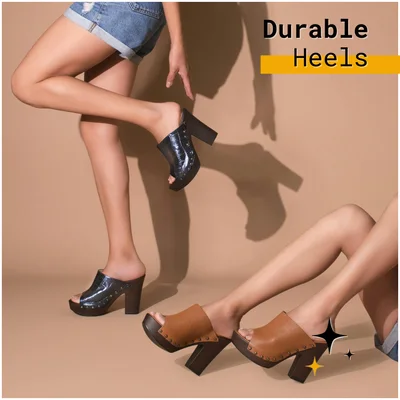
I have owned shoes that survived dreadful weather, regrettable decisions and more staircases than I care to count. I've also seen a heel tip give up before its owner reached the restaurant. The shoes were expensive. Apparently their warranty covered admiration, not movement.
So when someone asks about the most durable heels, I do not immediately recommend a brand. I ask a far more indecent question: How are they made?
The answer is usually hidden underneath the glamour, where nobody looks until something falls off. Let's have a look before that happens.
Durability begins at the part nobody photographs
A high heel is a small piece of engineering carrying a human being. It has an upper that holds the foot, a sole that meets the floor, reinforcement through the middle and a heel that must remain attached. A spectacular colour cannot compensate for an unstable structure. I know, because I've tried to reason with red shoes. They refused.
When examining a pair, I check six things:
- Heel attachment: no visible separation, wobble or clicking where the heel meets the sole.
- Heel tip: a replaceable, evenly seated tip on a narrow heel. An exposed metal pin is overdue for attention.
- Shank and midfoot: the shoe should support the arch, not fold like a paperback through its middle.
- Outsole: enough grip for the surfaces I actually walk on, plus a sensible way to repair wear.
- Upper and seams: no loose stitches, lifting edges or stressed openings at the straps.
- Fit: the correct length and width. A struggling foot can strain a shoe; a shoe that fits badly also harms the wearer.
The American Academy of Orthopaedic Surgeons recommends examining shoe construction, including a stable midfoot and heel counter. It is a fitting guide, not a laboratory ranking of heel brands. The distinction matters.

A stiletto is not automatically fragile
A thin heel concentrates force in a small area and its tip wears fast. That does not mean every stiletto is badly constructed. Nor does it mean a wide block heel is indestructible. A poorly attached block can fail too, just with greater visual confidence.
For a narrow heel, look at the straightness of the heel, its connection to the shoe and the condition of the replaceable tip. If the tip wears unevenly, replace it before the metal support touches the pavement. Some protective heel caps can reduce wear on rough ground, but they must fit securely and suit the heel's shape. They're not a licence to sprint down cobblestones.
For regular journeys, a lower, wider heel may be a more practical choice. The APMA recommends lower, more stable heels and good traction to reduce some risks associated with high footwear. Practicality is not a personality defect. It merely makes arriving at dinner more likely.
You can compare the silhouettes in my guides to stilettos and block heels.
Materials: leather, synthetics and the limits of expensive marketing
Good leather can age gracefully and may be repaired, conditioned and polished. The word leather, however, proves very little by itself. A thin, poor-quality upper glued to a weak sole won't suddenly become excellent because the product page says genuine.
Synthetic uppers can be lighter, colourful and suitable for people who avoid animal leather. Their durability varies widely. Some coatings eventually crack or peel and are difficult to restore invisibly. Others perform perfectly well for the intended use. I would rather examine the actual material than deliver a sermon on what shoes ought to be made of.
In a report based on interviews with cobblers, repairers point to solid construction, sturdy hardware and repairable soles as better clues than glossy labels. That is not a controlled comparison of every brand. It is useful workshop experience from people who see what happens after the glamour wears off.
For a separate discussion of the environmental and ethical questions, visit the morality of wearing leather. I promise not to settle industrial ethics with a photograph of a handbag.

Repairability is the overlooked luxury feature
Shoes that can be repaired have an advantage over shoes meant to be discarded. A cobbler may replace heel tips, add protective sole layers, reinforce stitching or repair certain straps and buckles. Whether a whole sole can be replaced depends on the construction and the extent of the damage.
A stitched sole is not automatically immortal, and a glued sole is not automatically rubbish. But methods that permit practical disassembly make some repairs easier. A fancy shoe with no viable repair route may be a very short romance at a very long price.
Before buying a costly pair, ask the retailer:
- Can the heel tips be replaced, and are replacements readily available?
- Can a local cobbler repair the sole, or is it a moulded unit with limited options?
- If the fastening breaks, is it conventional hardware or a proprietary decorative piece?
- Does the brand offer repair services, spare parts or written care instructions?
For the useful daily maintenance part, my shoe-cleaning guide explains what to do before a little dirt becomes a long-term issue.
The misleading mathematics of cheap and expensive heels
Price is a clue, not a verdict. I have seen expensive shoes whose delicate details were clearly designed for photographs. I've also seen modest pairs with sensible hardware and replaceable tips. Neither anecdote gives me the right to invent a universal durability score.
A more useful number is cost per wear. A pair costing £150 and worn 100 times costs £1.50 per wear before repair and maintenance. A £40 pair abandoned after five outings costs £8 per wear. There is no moral virtue in either price. There is, however, an interesting difference in arithmetic.
Don't confuse durable with comfortable. A rigid shoe can survive a decade while making its owner miserable for ten minutes. For fit and toe-box advice, read comfortable heels for men and heels width explained.
Men, larger sizes and the myth of the heavy-footed heel wearer
It is tempting to write that men always walk harder and therefore need industrial-strength heels. Tempting, but nonsense. Foot size, body weight, gait, activity and shoe design all affect the forces involved. Gender does not provide the manufacturer with an engineering specification.
For anyone with a larger or wider foot, I would inspect the shoe's last, the three-dimensional shape around which it was made. A narrow last cannot be redeemed by adding two centimetres of length. The heel cup, arch position and ball of the foot must line up too. My guide to large-size heels covers that problem at greater length.
If you want a boot that combines a familiar silhouette with some elevation, consider Cuban heels. They will not make you immortal, but they may spare you the structural negotiations of a needle-thin heel.

What about drag performers and platform monsters?
Stage shoes face a particular challenge: movement, quick changes, high platforms and sometimes uneven floors. Performers need secure fastening, traction and a construction appropriate to choreography. A dramatic appearance isn't evidence that a shoe is built for jumping or landing.
I won't tell anyone to test a pair by leaping off a bar. There are cheaper ways to discover gravity, and most of them come without an ambulance bill.
The practical part is to rehearse in the actual shoes, examine the straps and attachments before a performance and retire damaged pairs before they fail on stage. For the visual pleasures of performance fashion, visit drag queen style. This is one corner of fashion where my taste for excess finally feels restrained.
A five-minute inspection before buying
Pick up both shoes. Compare them from behind: do the heels stand straight and match? Check for lifting material around the heel base. Feel whether the sole twists easily through the arch. Examine any zipper, buckle or strap with the sort of suspicion normally reserved for small print. Put them on and walk, on a safe clean surface, for longer than the ten seconds required to admire yourself.
And look at the underside. The underside is where shoes confess.

The Heelsman's verdict
The most durable heels are not necessarily the ugliest, the lowest or the most expensive. They are the ones made well enough for their intended job, fitted to the person wearing them and cared for before a repair becomes a rescue operation.
I enjoy an extravagant shoe. I enjoy a bargain too. What I refuse to enjoy is paying a premium for an object whose main design feature is surrender.