How to Clean High Heels Without Committing a Crime Against Leather
I've made mistakes in my life. Some were romantic. Some involved online shopping after midnight. The most expensive ones began with the words, I'll just use whatever cleaner is under the sink.
Cleaning high heels is easy right up until you treat satin like a kitchen tile and patent leather like a laboratory experiment. The shoes were innocent. The cleaning method was not.
Here is how I clean heels by material, what I leave to a professional and which clever little hacks I refuse to attempt. Your shoes will thank you. They may still judge your taste in parties.
The first rule: identify the material before touching the stain
Different finishes need different treatment. Smooth leather can tolerate care products designed for leather. Suede has a raised nap that needs gentle brushing. Satin can mark with moisture. Patent leather has a glossy coated surface; standard leather polish is not automatically the right answer.
Check the manufacturer's label or product page first. When using a new product, test it on an inconspicuous area. Be particularly cautious with vintage dyes, embellished finishes, hand-painted shoes and any pair you cannot afford to replace.
I keep a small shoe-care kit rather than a chemistry set:
- Two clean, soft cloths, ideally lint-free.
- A gentle brush for removing loose dirt from soles and seams.
- A dedicated suede or nubuck brush and eraser.
- Cleaner and conditioner designed for the specific leather finish.
- A patent-leather product for glossy coated shoes, if needed.
- Tissue or clean paper to support the shape while drying.
- A reputable cobbler's contact details. This last item is the most glamorous.

Smooth leather heels: less scrubbing, more judgement
Start by wiping away loose grit. A soft brush is useful around the welt and sole edge, but avoid scratching fine leather with hard bristles. Then use a barely damp cloth for surface dirt. For deeper marks, choose a leather cleaner recommended for that finish and follow its instructions. Remove residue and let the shoe dry naturally.
If the leather needs conditioning, use a small amount of suitable cream. More product does not mean more care. It means sticky shoes, ruined tights and a deeply embarrassing lecture from the leather.
Red Wing's smooth-leather guide explains the clean, condition and protect sequence. Their advice is written for their footwear, so follow the instructions for the leather on your heels rather than treating one brand's cream as universal medicine.
Scuffed smooth leather may respond to a matching polish or cream. Deep cracks, torn stitching and separated heels will not. I love an optimistic restoration, but a cream cannot negotiate structural repairs.

Suede and nubuck: the aristocrats of inconvenient weather
I adore suede. It feels luxurious, looks quietly expensive and takes personal offence at unexpected rain. The solution isn't to attack it with detergent. Let muddy suede dry first, then gently remove loose dirt using an appropriate suede brush or eraser. Work with the texture, not against it.
For more persistent stains, use a suede-specific cleaner. Keep moisture controlled and follow the product's instructions. Don't assume a method suitable for smooth leather is safe for suede. A heavy conditioner or ordinary cream can alter its finish.
The Clarks suede-care guide explains gentle brushing and the risk of soaking the material. Red Wing's roughout and nubuck guidance also describes using an eraser and brush to restore the nap.
As with all things involving delicate textures, restraint is considered a virtue. I find this deeply inconvenient.
Patent leather: shine without kitchen chemistry
Patent leather looks spectacular under lights and records every fingerprint like an overenthusiastic detective. Usually, a soft slightly damp cloth will remove surface dust. Dry with another clean cloth. For persistent marks, use a cleaner approved for patent finishes and test discreetly.
The Dr. Martens patent-care guide recommends wiping, using a dedicated patent cleaner and buffing. It does not give you permission to reach for rubbing alcohol, acetone, nail-polish remover or random household solvents. Such products can discolour or damage a coating.
Keep patent shoes away from prolonged heat and careless contact with materials that might transfer colour. And if the coating is peeling, a little more polishing will not put it back. A specialist may advise on repair, but not every coating can be restored invisibly.
Read my patent leather article for the detailed version, including why gloss can be glorious and annoyingly unforgiving.
Satin and fabric heels: patience, not enthusiasm
Satin wedding heels and evening shoes are another category altogether. Some fabrics show water rings even after careful cleaning. First identify the fabric, dye and decorative elements. Remove dry dust gently. For spots, consult the manufacturer's directions and test any permitted method in a hidden area. Use the minimum moisture necessary, and blot rather than rub aggressively.
Do not soak fabric heels, machine-wash structured shoes, or assume a vinegar solution is appropriate for an unknown dye. Beads, embroidery and glued decorations can make even gentle cleaning risky. Expensive satin may deserve a specialist before you experiment.
If you have wedding heels, the best strategy is often prevention: keep them protected until needed, bring a suitable change of shoes and check the ground before walking on wet grass. White satin and a garden reception enjoy a complicated relationship.
Clear, vinyl and synthetic heels: know your coating
Transparent heels and PVC panels collect fingerprints and smears, but they are not all made from the same polymer or finish. A soft cloth and a little water may be enough for ordinary surface grime if the manufacturer permits it. Avoid abrasive sponges and unapproved solvents. They can scratch or cloud the surface.
Watch the glued joins and decorative pieces. Moisture trapped around a seam can create trouble. If the clear material has yellowed or become cloudy with age, wiping harder is unlikely to reverse the chemistry.
For more about their looks and limitations, see transparent high heels. I do admire a shoe that shows everything. Except my bank balance.
What about the heel tip, sole and inside of the shoe?
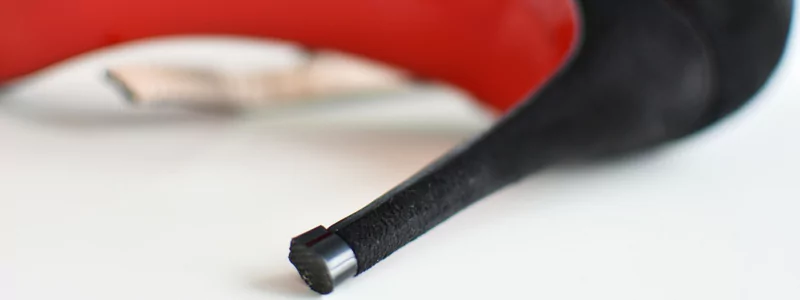
Surface cleaning is only half the job. Turn each shoe over. Remove small stones and debris from the sole with a suitable dry brush. Check the heel tip for uneven wear and exposed metal. If it's worn down, visit a cobbler before the actual heel starts taking damage. That usually costs less than pretending not to notice.
The inside deserves a separate cloth. Allow shoes to air between wears if they become damp from perspiration. Insoles, linings and adhesives may be sensitive to moisture, so don't saturate the interior with perfume or disinfectant. If odour persists, follow the manufacturer's treatment advice or ask a footwear professional.
A loose heel, cracked shank or damaged strap is not a cleaning problem. Stop using the shoes until they are checked. My guide to durable heels covers the construction problems that a microfiber cloth cannot solve.
The post-party routine: four minutes of civilisation
You return home. The shoes have survived dancing, pavements and some unfortunate decision involving prosecco. You want to fall into bed. Understandable. But give your footwear a minute before abandoning it to the cupboard.
First, check for damaged tips or loose straps. Second, remove loose dirt and blot any fresh surface moisture without rubbing it into the material. Third, let the shoes dry at room temperature, out of direct heat, with their shape supported as appropriate. Finally, put them away only when dry. A clean cloth bag or breathable storage space is preferable to trapping damp shoes in plastic.
Red Wing's care instructions caution against radiators and hairdryers for drying leather footwear. Glue, finishes and natural materials have no interest in your desire to wear the same pair again in forty minutes.
For longer-term organisation, my shoe storage guide goes into boxes, shelving and keeping special pairs presentable. I am sentimental about my shoes. I prefer to call it archival responsibility.
Three things I will not do to my heels
I will not throw them into a washing machine. Even if the upper looks washable, the heel, structure, glues and decorations may disagree.
I will not use a hairdryer to reshape or speed-dry them. Heat can damage finishes, dry leather and affect adhesives.
I will not treat internet hacks as material science. Toothpaste, bleach, acetone and rubbing alcohol are not a universal restoration kit. If a method has no material-specific guidance, it stays away from my collection. I can be reckless with fashion. Not with chemistry.
A short shopping list, without the sales pitch
For most wardrobes, the useful items are modest: separate clean cloths, a soft brush, a suede eraser and brush if you own suede, plus a care product specifically approved for your leather or patent finish. A storage bag and replacement heel tips fitted by a cobbler can be more valuable than a shelf of miracle sprays.
For examples of how brands match cleaners to finishes, see Saphir's material-specific cleaner instructions and Dr. Martens' patent-care guidance. These are examples, not a claim that one brand is ideal for every shoe.
The Heelsman's closing argument
I keep shoes because I love how they look, how they make an outfit behave and occasionally how they make strangers misbehave. Taking care of them is the least theatrical part of the affair. It is also what makes the theatrical parts possible again next Saturday.
Clean gently. Match the method to the material. Repair the things cleaning cannot fix. And if a pair is beyond saving, honour its service. Preferably without a funeral. I have enough things in my wardrobe that require black.