The Morality of Leather Shoes: An Elegant Argument with No Easy Exit
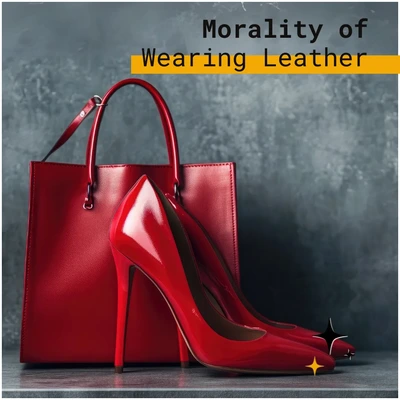
I like leather. There, a confession delivered without organ music. Its smell, its texture, the way well-made footwear changes character with age. I also dislike lazy moral arithmetic, especially when presented by somebody trying to sell me a product with an aggressively green leaf on the packaging.
Whether leather shoes are ethical is not a question that can be settled by praising craftsmanship or announcing that plastic is vegan. It involves animal welfare, material sourcing, tanning, chemical use, working conditions, durability, repair and personal values. A good answer admits there are trade-offs. A bad one has a discount code.
First question: do you object to animal-derived materials?
Leather is an animal-derived product. For people whose ethics reject the use of animal skins, the answer is straightforward: they will not want leather shoes, regardless of the quality, price or lifespan. That is a coherent position, and it is not refuted by pointing to how many generations of shoemakers have admired a good hide.
Others accept leather under certain conditions, for example if it is a by-product of meat production, if the material can be traced, or if they expect a well-made pair to last for years. Yet calling something a by-product does not make it ethically neutral. Hides have economic value, and supply chains have incentives of their own. The degree to which leather demand influences livestock economics varies and cannot be inferred from a single product label.
I find it helpful to separate values from measurable characteristics. You may decide that no animal-derived material is acceptable. You may decide repairability and longevity matter heavily. Neither choice needs to be disguised as an irrefutable scientific theorem.
The tanning question
Turning a hide into durable leather involves industrial processing, commonly including tanning, finishing and colour treatment. These stages can involve significant use of water, energy and chemicals, and require responsible management of wastewater and worker safety. The US Environmental Protection Agency's leather tanning guidance identifies regulated pollutants including chromium, sulfides, suspended solids and organic loads in tannery effluent.
This does not mean all leather is produced under identical conditions. Facilities differ enormously. Nor does the presence of chromium in a regulatory description mean every leather product poses the same exposure risk to its wearer. The useful questions concern actual processes, control measures, compliance and the transparency of the supply chain.

A leather shoe sold as premium Italian leather has not answered these questions. The phrase might tell you something about marketing positioning, maybe even provenance in favourable cases, but not automatically how the tannery handles wastewater or what happens upstream. I admire Italian shoemaking. I refuse to treat an adjective as a chemical analysis.
What certification can and cannot tell you
The Leather Working Group's manufacturer audit standard covers aspects of environmental management, traceability, chemical controls, social responsibility and other factory-level requirements. Its assessments can provide information about a manufacturer's operations.
But certification has boundaries. The organisation's FAQ explains that its leather manufacturing audit does not assess slaughterhouses or farms directly. An audited tannery does not therefore prove that every animal welfare question in the entire chain has been answered. A brand should be able to explain precisely which facility was assessed, what the standard covers, and whether its particular product is traceable to that facility.
If a retailer uses a green badge without telling you its scope, ask. If it cannot explain the difference between a factory audit and a product-wide guarantee, consider that silence part of your purchase decision.
Is vegan leather automatically better?
Not necessarily. Many products marketed as vegan leather are largely synthetic polymers, sometimes polyurethane or PVC, with textile backings and additional coatings. Animal-free does not mean plastic-free, biodegradable, low-carbon or easily recyclable. Some newer materials incorporate plant-derived ingredients, but a marketing name alone doesn't tell you what percentage of the finished product is plant-based or what bonds its components together.

There are ethical benefits for people seeking to avoid animal products. Environmental comparisons are more complicated. They depend on the exact materials, production methods, service life and disposal routes. A durable synthetic shoe worn for years and a fragile leather shoe discarded after one season cannot be judged solely by their labels, just as the reverse comparison cannot.
My eco-friendly high heels article examines these claims in greater detail. It has the unfortunate habit of asking questions that marketing departments would prefer not to hear.
Buying less is unfashionably effective
Consider the shoes already in your wardrobe. If a good leather pair can be maintained and repaired, keeping it in use may avoid the need to purchase another pair. Repairability is not solely a question of leather; it depends on construction, sole attachment, heel tips and whether a skilled repairer can access the parts.
I am suspicious of the idea that buying an entirely new wardrobe is always the correct response to learning about environmental impact. Before buying, inspect stitching, sole quality and heel construction. Ask whether the maker supplies replacement parts or offers repair. Take care of shoes according to their materials, using my shoe-cleaning guide as a starting point.
Second-hand footwear is another option, with its own complications. Check the condition of the insole, upper, heel attachment and sole. A beautifully photographed vintage shoe may have been shaped by somebody else's foot or may hide serious wear. My guide to used high heels covers the more practical questions.

What I would ask a shoe brand
Where was the upper material produced, and can you identify the facility? What does any environmental certification actually cover? Is the lining leather, synthetic or a mixture? What happens if the heel tip wears out? Can the sole be repaired? Is the product designed to be used for years, or to look good for one launch campaign? Do you publish a material composition rather than a charming adjective?
I would also ask about worker safety, animal welfare policies and independent verification when those matter to the buyer. A company may not be able to trace every component perfectly. That is worth disclosing. What I won't tolerate is pretending a tiny leaf logo answers a complicated supply-chain question.
The personal verdict, without pretending it is universal
I still wear leather shoes. I value their construction and enjoy their aesthetics. That is a personal choice, not a moral proof that everyone else should make the same one. I can acknowledge costs and uncertainties while trying to buy more carefully, maintain what I own and avoid the disposable end of fashion.
Someone who chooses animal-free footwear is entitled to the same intellectual respect. The interesting argument is about accurate claims, viable alternatives, labour standards, animal welfare and material performance. It is not an opportunity to score points by sneering at a stranger's shoes.
I would like my wardrobe to be beautiful. I would also like the story behind it to survive a few precise questions. The first ambition is easy to photograph; the second requires a little work.