Work Heels: A Professional Opinion, Delivered at Heel Height
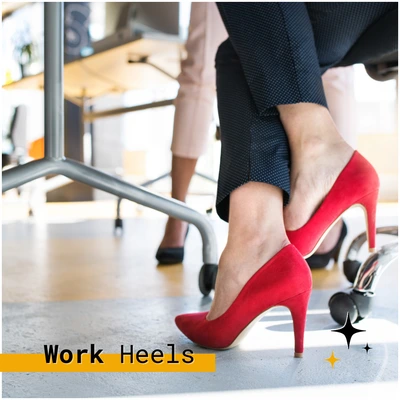
Apparently, the office has a dress code. Sometimes it is written down. Sometimes it lives entirely inside the imagination of a man who owns five identical navy ties. I have considerable respect for good tailoring. I have considerably less respect for the idea that competent employees must all dress like the same department-store mannequin.
I have worn heels to a job interview. I got the job. Afterwards, I learned that my confidence and composure had contributed to the impression I made. That is a real experience, not evidence that every hiring manager will respond the same way. I would prefer not to turn one fortunate interview into a management textbook. The internet already has quite enough of those.
Work heels should do three things: fit the job, fit the foot, and fit the person. Ideally without introducing a fourth task called surviving until five o'clock.
What makes a good pair of work heels?
Start with the day itself. Are you sitting at a desk, crossing a large building, standing at a counter, or travelling between meetings? Do you face wet entrance tiles, polished stairs, outdoor pavements, or industrial floors? The answers are more useful than any universal ranking of the best office heel.
For a mostly desk-based day, a modest block heel, low pump, heeled loafer, or carefully fitted ankle boot can be practical. Long periods of standing may demand flatter, more supportive shoes. Jobs with protective-footwear requirements may leave no room for fashion experiments. I am fond of shoes, not employment-related ankle injuries.
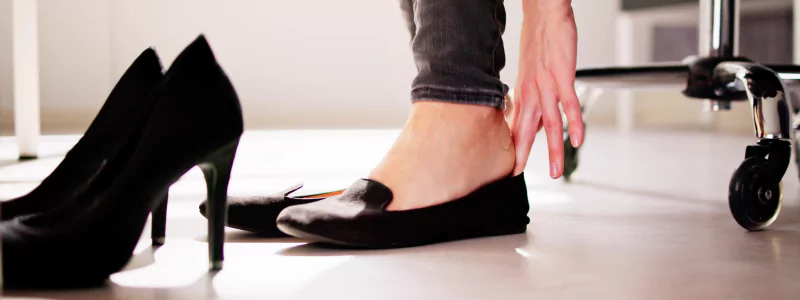
The Kent NHS footwear guidance recommends secure fastenings, adequate toe room and supportive soles for everyday shoes. Notice the irritating absence of the phrase six-inch power stiletto. Clinical guidance rarely understands theatre.
Our comfort guide for men in heels goes into heel shape, width, and foot volume. These principles do not change when somebody attaches a corporate badge to the outfit.
A lower heel can still have a sharp opinion
The shoes I find most convincing for everyday office wear are not necessarily the tallest. A low block heel can look crisp under tailored trousers. A sensible heeled loafer can give a formal outfit a little bite. A short Cuban heel with a slim boot brings a distinctly masculine language to the same idea.
Of course, a stiletto can look spectacular with a suit. There is a difference between looking spectacular for thirty minutes and wanting to wear the same pair on a four-hour site visit. I admire ambition. I simply refuse to confuse it with an ergonomic plan.
Try Block Heels for a grounded comparison, or Cuban Heels for tailoring with a little rock-star arrogance.
Quiet heels: the boardroom has acoustics
A heel can announce an entrance. Sometimes that is delightful. Sometimes you are arriving late to a presentation and wish the entire building would stop listening. Quietness depends on the heel tip, sole, floor surface and walking style, not simply the upper material.
Hard, worn heel tips often make sharper sounds against hard flooring. A cobbler may be able to fit appropriate replacement tips or address uneven wear. Rubber or suitable non-slip outsole components may also help, depending on the shoe. Do not attach random materials with household glue. Repair is a profession, and office corridors are poor testing laboratories.

If you want a quieter arrival, shorten your step slightly and avoid striking the floor dramatically with the heel. That also encourages more controlled walking. My high-heel walking guide covers that without promising a runway career.
The shoe you need at work is not always the shoe you commute in
This is my favourite practical compromise. Travel in footwear suitable for the journey. Change when you arrive, if your workplace allows it. Keep spare shoes where they stay clean and dry. Use a breathable bag for the trip home. It is a remarkably efficient system, once you stop expecting one pair of shoes to be excellent at everything.
An office shoe can live at work. A walking shoe can do the commute. A particularly glorious pair can appear for a presentation or dinner. Multiple shoes do not signal weakness. They signal an understanding that feet have schedules.
In a full day, alternate sitting and standing when possible. Check that your toes are not squeezed and that the back of the shoe is not rubbing. If pain or numbness appears, change footwear rather than trying to impress colleagues with endurance. The colleague most likely to notice is your future podiatrist.
Safety comes before the dress code, including the fashionable one
The British Health and Safety Executive advises employers to consider actual floor conditions when selecting footwear. Its slip-resistant footwear guidance explains that grip claims must be evaluated against the surfaces and contaminants present. A shoe advertised as slip-resistant does not automatically suit every wet or oily environment.
That matters for restaurants, studios, warehouses, workshops, and even the innocent-looking office entrance after rain. The proper shoe depends on the hazard. Fashion cannot override mandated protective equipment. I believe one can be stylish and still obey gravity, the workplace rules, and, occasionally, the law.

The photograph above makes the point rather efficiently: a glossy heel and a shovel may look wonderful in an absurd editorial. They are not a sensible recommendation for physical labour. I enjoy provocation, but I dislike the prospect of becoming the subject of an incident report.
Men in office heels: competence is not a shoe category
A man in a suit and heeled boots can look unmistakably masculine. The heel does not have to feminise the outfit. For some of us, it does precisely the opposite: it sharpens posture, heightens presence, and turns an ordinary look into a deliberate one. For others it can express softness, femininity or experimentation. The shoe is not in charge of assigning identities.
Office culture is another matter. Some workplaces are relaxed; others have conservative expectations, uniform rules, or practical requirements. Learn the context. Decide what level of attention feels comfortable and safe. If you are interviewing, choose shoes that let you focus on the conversation, not a blister forming halfway through your qualifications.
Our Men in Heels article explores the bigger question. Here the smaller question matters: will you be able to walk from the door to the meeting room without thinking about your footwear every three seconds?
Dressing professionally without dressing anonymously
An uncomplicated starting outfit is dark tailored trousers, a fitted shirt, a jacket and low black heels. Another is a long skirt, polished block heels and a crisp blazer. Jeans and heeled boots may work in a casual office. The details matter more than the department labels on the hangers.
Black is useful, but oxblood, deep green, brown suede and navy can be equally effective. Shoes can coordinate with a belt, watch strap, bag or knitwear. They need not match every accessory precisely. This is an office, not a forensic reconstruction of a handbag catalogue.
Read Oxford Heels if you want something scholarly and mischievous, or Heels with Jeans for relaxed workplaces.
How to handle the occasional question
People may ask why you wear heels. Some ask from curiosity. Others have appointed themselves the unpaid footwear inspector. You are not required to deliver a lecture. A perfectly adequate answer is that you like them. If you feel playful, say the shoes were having a better morning than your trainers.
Where questions become harassment or workplace discrimination, treat that as a separate issue. Document what happened and consult the relevant policy or local employment guidance. There is no universal legal answer for every country or workplace. I shall not pretend otherwise. A shoe blogger is many things. Your entire legal department is not one of them.
My desk drawer has a point
I keep practical things near the desk: suitable spare footwear, a small foot roller for breaks, and whatever the day requires. There is no need to spend eight hours demonstrating commitment to a pair of shoes. They are shoes. They should serve you, not conduct performance reviews.
The best office heels make your appearance feel intentional while letting you concentrate on your work. That is the real standard. If someone thinks professionalism can be measured by the height of your heel, I recommend assigning them a different spreadsheet.