Heels Slipping Off Your Feet? The Shoe Is Trying to Leave
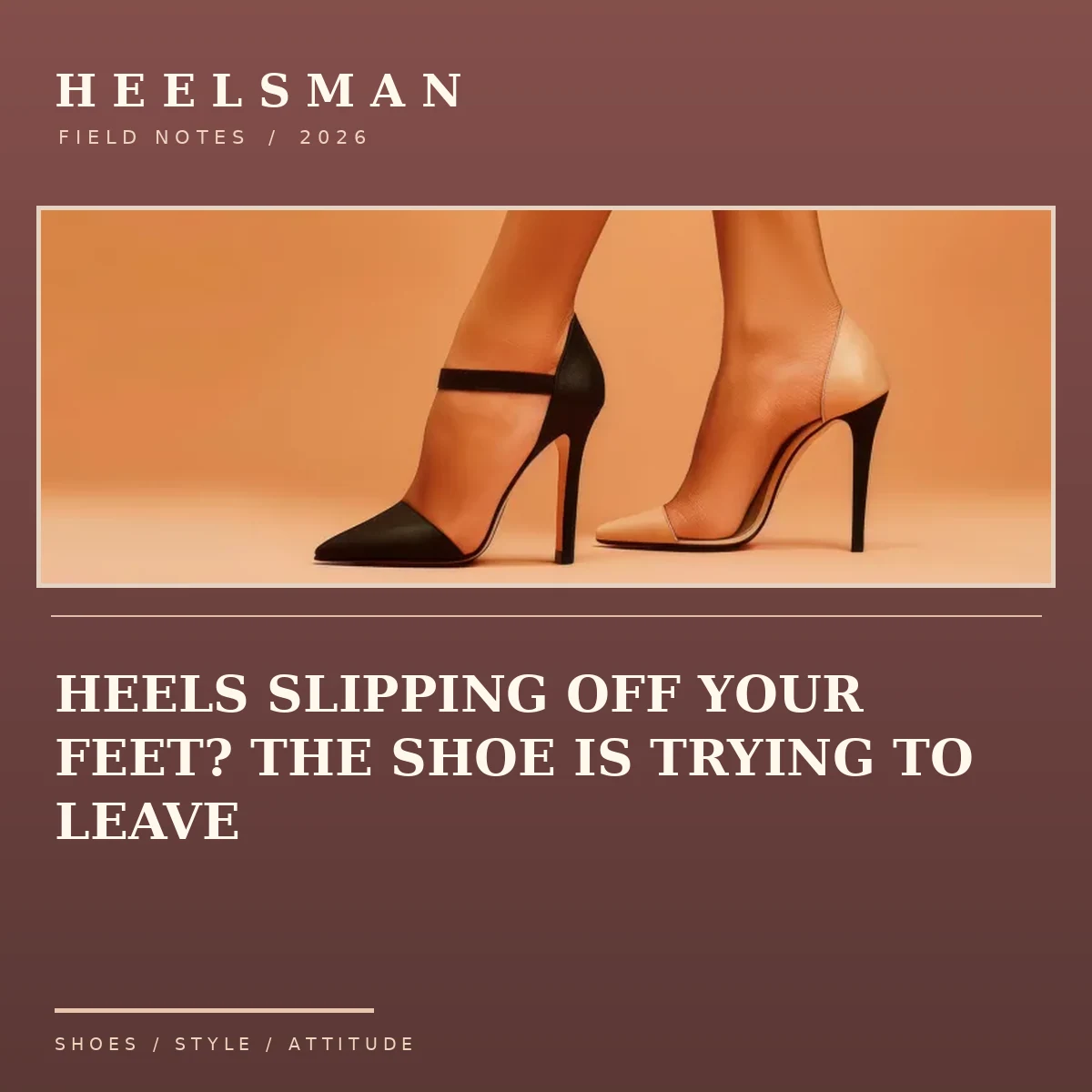
There are many difficult conversations in life. One of the least dignified takes place between a person's foot and a pump that would very much like to go home alone. You take a step; the heel lifts out; the shoe makes a tiny proposal for separation. No solicitor is required, but a sensible fitting decision certainly is.
Heel slip is common enough to deserve a serious explanation. The fixes differ depending on whether your entire shoe is too big, your foot is sliding forward, the heel counter is poorly shaped or a strap is failing to do its job. I regret to inform you that buying three identical packets of gel pads is not a diagnosis.
First, identify what is moving
If the back of your foot rises out of a pump every time you walk, check whether the shoe is too long or the heel opening too wide. If your foot slides forward inside a high heel, the heel may seem loose even when the overall length is reasonable. If a slingback strap falls down, the trouble may be the strap geometry rather than the full shoe size.
Try a simple test on a clean, firm indoor floor: stand, walk a few normal steps, turn, and observe where the foot moves. Do not shuffle artificially or curl your toes to make the shoe behave. Your usual walking motion is the information you need.
The most important question is whether the shoe fits properly everywhere else. If your toes are cramped while the heel is slipping, you have a shape mismatch, not necessarily an oversized shoe. Heel Width Explained explains why forefoot width, instep volume and heel width do not always arrive as a matching set.
Why a heel grip can help, and when it cannot

A thin heel grip can sometimes reduce minor movement or friction at the back of an otherwise correctly sized shoe. It is a small adjustment, useful in some cases, not a conversion kit for a shoe two sizes too large. Avoid piling adhesive pads into the heel until there is nowhere left for your foot to sit.
A forefoot cushion might change how your foot slides in the shoe, but it also changes the available internal volume. In a cramped shoe this can increase pressure, so do not treat gel inserts as harmless by default. Test one modification at a time and stop if it creates numbness, pressure or instability.
The AAOS guidance on tight shoes and foot problems emphasises correct size, adequate toe room and secure fit. It does not endorse painful shoes as a personal development exercise.
Straps, laces and other useful engineering
A correctly fitted T-strap heel can keep the foot better positioned than an open pump. A lace-up heel with an adjustable upper may provide a more individual fit around the instep. These benefits depend on the closure doing its actual job, not being tied so tight that the foot is squeezed.
An ankle strap can also improve retention, but beware the easy mistake of cinching it tighter and tighter while the forefoot continues sliding forward. The pressure simply relocates to the ankle. That isn't a solution. It is a change of complaint department.
If the shoes are repeatedly leaving the heel during ordinary steps, a different last or style may be a better choice. There is no obligation to remain loyal to a pair that keeps trying to escape.
When a cobbler is worth asking

Some leather shoes may permit minor professional fitting adjustments depending on their construction and condition. Ask a qualified shoemaker what is realistic for the particular shoe. Synthetic materials, delicate finishes and glued constructions may not tolerate the same treatment.
Do not soak the shoe, freeze bags of water inside it or attack it with a hairdryer until the upper resembles an archaeological experiment. Such techniques can damage finishes and adhesives and will not reliably change the underlying heel geometry. How to Clean Heels covers gentler material care.
Check the heel itself as well. A worn tip, loose heel attachment or uneven sole can change your gait and make an existing fit problem more noticeable. A repair professional can assess whether the structure needs attention.
Three cases where returning the shoe wins
The pump is too long: The foot slides and the back opens visibly. A heel pad cannot responsibly make a substantial size mismatch disappear.
The toe box is painfully narrow: The instinct to buy a larger size may ease the front while creating new movement at the back. Find a last with a better forefoot shape instead.
The slingback strap will not stay in place: If the band is adjusted properly and still falls off during ordinary walking, try another design. Charles & Keith's slingback fitting advice identifies repeated slipping as a sign of a poor fit.
A small note on looking elegant

Nothing destroys the effect of a dramatic entrance quite like stopping every fifth step to retrieve your shoe. The audience may admire the heel. They will admire it less when it travels independently across the pavement.
Buy a pair that cooperates with you. A little creative arrogance is splendid. Footwear that requires constant negotiation is merely exhausting.