Lace-Up Heels: The Art of Tying Yourself in Knots
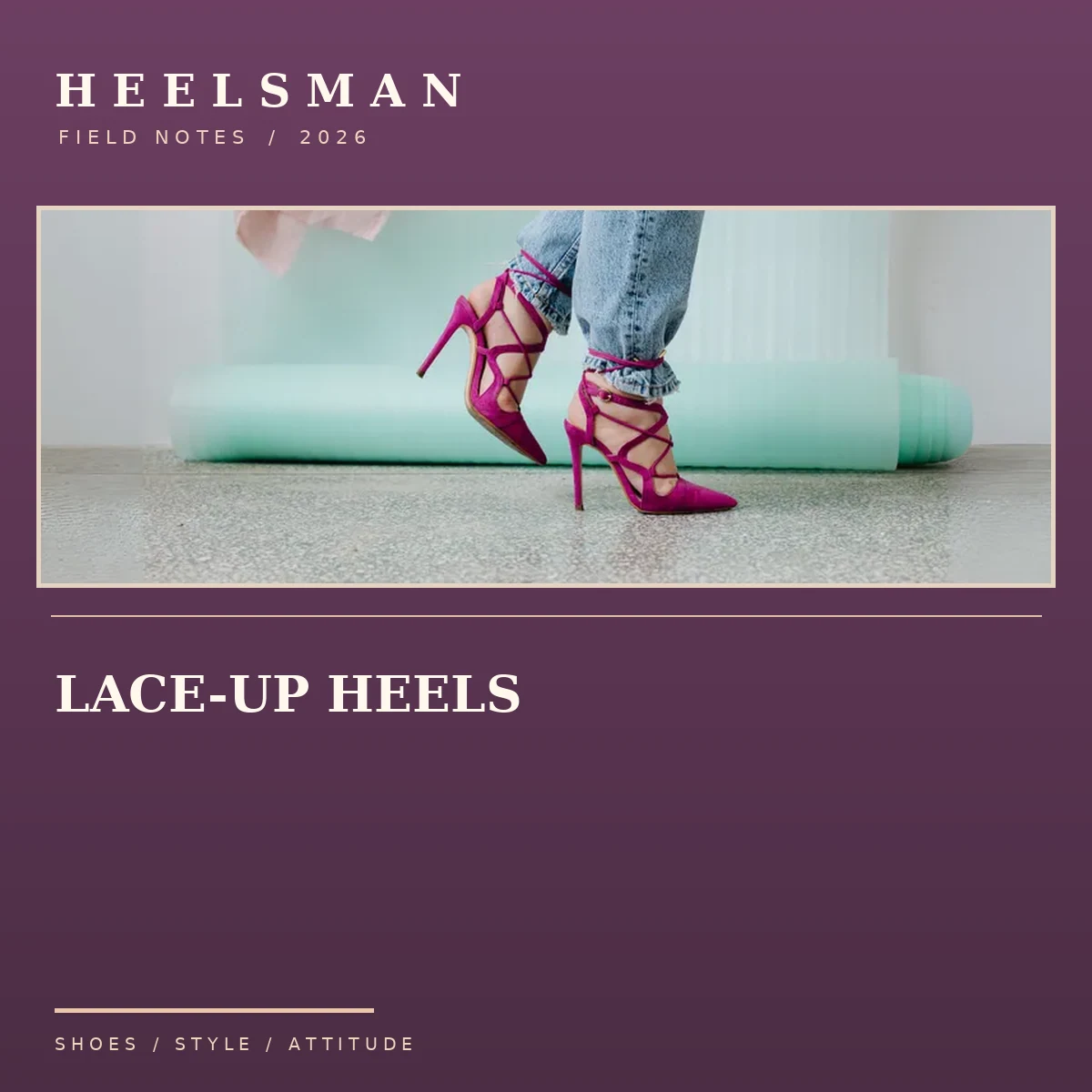
A lace-up heel invites you to perform a tiny ceremony before going out. There is a shoe, a length of ribbon or leather, and a promise that the result will look effortless. Several minutes later you are on the floor attempting maritime knots in hosiery. Fashion is a magnificent liar.
Still, the best lace-up heels are worth the trouble. They are decorative without always being glittery, secure without looking orthopedic, and available in everything from restrained ankle boots to party shoes that have clearly never met a quiet evening.
What does lace-up actually mean?

It describes a fastening system, not one shape. Some designs use conventional laces threaded through eyelets on the upper. Others use thin ribbons crossing the front of the ankle and tying around it. Ghillie-style shoes often have open sides and crisscross lacing. Lace-up ankle boots may cover most of the foot and have a zip as well as laces.
That distinction matters when searching online. Lace-up heels may return anything from a delicate wraparound sandal to a rugged platform boot. Add the words ankle boot, ghillie, block heel or stiletto sandal to narrow the results. Otherwise your search engine will decide what sort of person you are, and it has very poor taste.
Historically inspired shoes use lacing in very different ways. The V&A's discussion of Vivienne Westwood's Super Elevated Gillie connects the 1993 design to older ribbon-laced styles. It also recalls the notoriously difficult runway conditions of that extreme platform. An icon of fashion is not automatically a sensible blueprint for the office.
Pretty laces versus functional laces
A decorative wraparound cord does not necessarily stabilise a loose shoe. A properly built laced upper, particularly on a boot, can allow more adjustment across the instep. But if the toe box is wrong, tightening the laces only transfers the misery to a different part of the foot.
Try the pair with the laces adjusted to a comfortable tension. Stand up, bend the ankle naturally, and walk for a few minutes. The foot should not slide forward; the ankle should move without sharp pressure; the ties should remain where you put them. If the shoe only fits while strangling your instep, the relationship has already become unhealthy.
The AAOS footwear guidance notes that fastenings such as laces and buckles can offer more support, while also emphasising a suitable toe box and overall fit. The fastening cannot perform magic on a badly shaped last.
The lace-wrap mistake that ruins an evening

Many thin-strap sandals are styled with long cords winding up the calf. On a stationary model, the result can be striking. In motion, the arrangement may slip, loosen or dig in. Tight wrapping can also leave painful indentations. A photo of a beautifully arranged ribbon is not evidence that the ribbon will remain beautifully arranged after a train journey.
Tie low and comfortably, follow the manufacturer's intended route, and check that you can flex your ankle and move your toes. Do not cut circulation in pursuit of symmetry. If the shoes require a complex knot to keep the heel from sliding, reassess the fit rather than upgrading your nautical education.
A structured ankle-strap heel is often easier for a first attempt at straps; a T-strap heel supplies a similar visual line with fewer knots to negotiate. There is no prize for selecting the most complicated closure.
Outfits: from discreet to delightful trouble
Lace-up ankle boots with jeans: Dark boots under straight denim can be a strong unisex look. A slightly cropped hem reveals the lacing without showing the entire construction. See Heels with Jeans for help with lengths.
Ghillie heels with tailored trousers: The crisscross opening introduces softness to a structured suit. I like black on black, particularly when the upper has small leather sections and the laces are the only visible extravagance.
Ribbon-laced sandals with eveningwear: Use an outfit with an uncomplicated silhouette. The straps already provide movement and detail; they will thank you for not adding three necklaces, a giant belt buckle and a handbag shaped like an endangered animal.
Tall lace-up boots: These can be theatrical and excellent. Treat heel height, shaft fit and weight as practical concerns. A lace-up platform heel may distribute height differently from a slender stiletto, but the platform does not make your ankle indestructible.
Cleaning, storing and replacing laces

Untie the fastening rather than hauling the shoe off by the heel. That is an easy way to stretch eyelets, damage loops and distort the upper. Allow damp shoes to dry naturally away from direct heat. Check whether replacement laces are available in the right length and thickness; a decorative ribbon can look luxurious but behave poorly if it is too slippery.
For leather and fabric care, follow the material-specific advice in How to Clean Heels. If stitching around an eyelet pulls loose, a shoemaker is preferable to an enthusiastic home-repair experiment involving the strongest glue in the house.
Lace-up heels are charming because they invite participation. The wearer does not merely put them on. The wearer finishes the design. Ideally without needing an assistant, a diagram and a small glass of gin.