T-Strap Heels: The Shoe That Knows How to Hold On
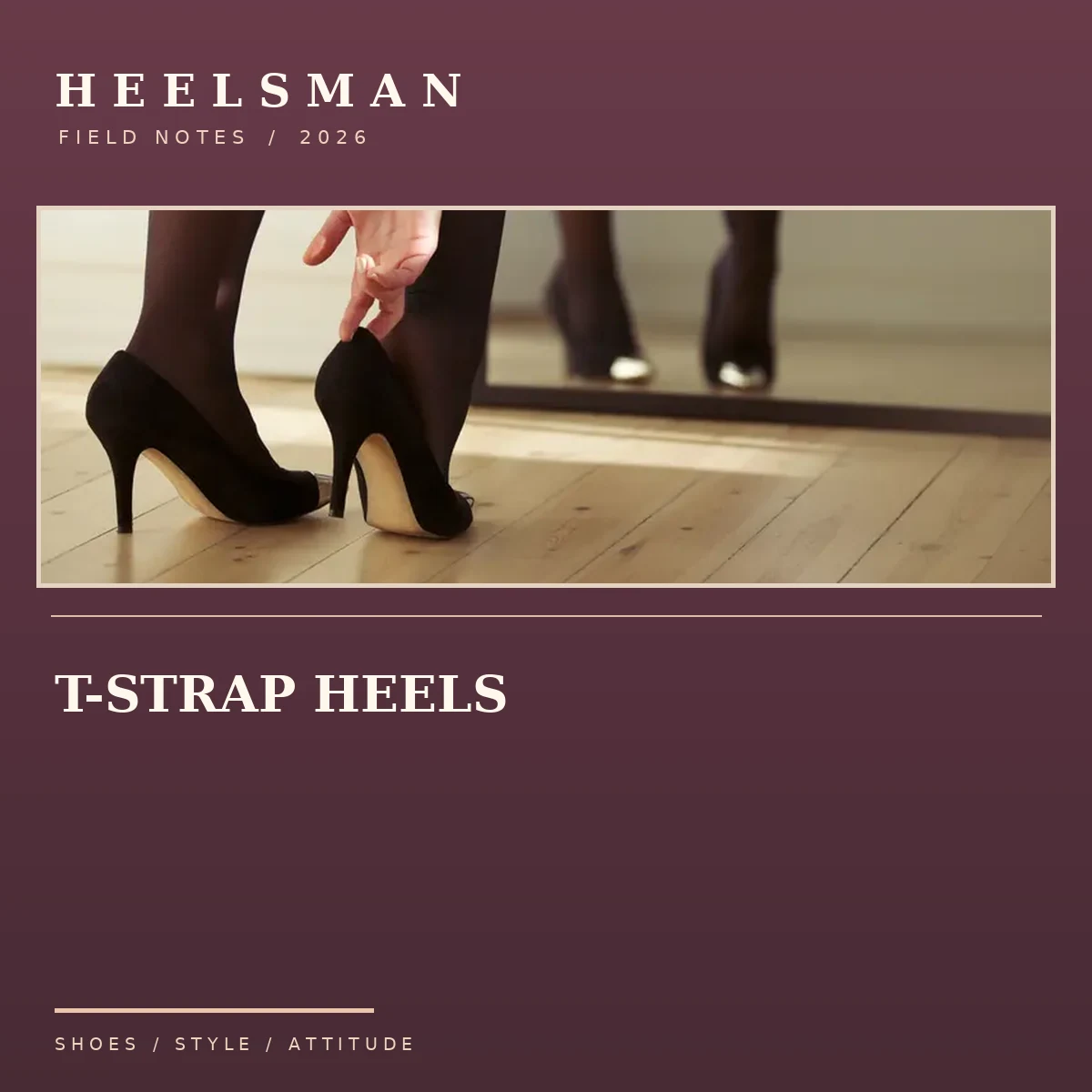
A T-strap shoe has one excellent virtue: it looks as though somebody in the design department understood the assignment. Not merely make a pretty shoe. Make a pretty shoe that actually stays attached to a foot while its owner makes questionable decisions at a party.
There is something almost comically respectable about that little strip of leather running up the instep. A T-strap can make a severe black pump look flirtatious, give a men's suit an interesting interruption, or persuade a vintage dress that the calendar has taken a wrong turn. I would not call it discreet. I would call it well mannered enough to be dangerous.
What exactly are T-strap heels?

Look down at the shoe. A strap runs from the toe area up the centre of the foot and meets a cross-strap or fastening around the ankle. Seen from above, those components form a T. Hence the name, thankfully spared the attentions of an expensive branding consultant.
The T-strap describes the upper and fastening, not the heel shape. You can find low T-bar shoes, medium block heels, and slender evening versions. There may be a buckle, a button or another closure. A Mary Jane generally has a strap across the instep without that central stem. Ankle-strap heels put the fastening near the ankle but do not necessarily create the T.
That difference is useful when shopping. Search for T-strap heels and T-bar heels, particularly on British sites. If the photographs show only a single horizontal band, it is probably a Mary Jane wearing somebody else's name tag.
The 1920s would like their shoe back
T-straps became an especially recognisable part of fashionable footwear during the 1920s. As hemlines rose and shoes became more visible, the straps took on a decorative role alongside their practical purpose. Footwear researchers at SATRA describe the T-strap as a popular design in the Roaring Twenties, sometimes adorned with sequins and geometric decoration.
You can see a related period shape in the Metropolitan Museum of Art's American shoes dated around 1925. The museum identifies features borrowed from contemporary women's T-strap designs. It is a useful reminder that shoe history lives in actual objects, not only in the sepia filter of costume dramas.
The shoe never really left. It survived swing dances, retro revivals, bridal collections and countless people who rather like their shoes to remain on their feet. There is history here, but no obligation to look as though you have just escaped a silent film.
Does the T make heels easier to walk in?

It can help with retention. The centre strap and ankle fastening may hold the shoe more securely than a similarly shaped backless or unsecured pump. That does not cancel out heel height, balance, sole rigidity or poor sizing. It is a strap, not a signed agreement with gravity.
A good fit means the strap lies comfortably along the instep without digging in, the ankle closure leaves room to move, and the toes are not crushed forward. Check how it feels when you walk, sit and stand. If the shoe bites at the base of a toe or buckles awkwardly as your foot flexes, move on. The AAOS guide to proper shoe fit makes the central point beautifully: choose shoes shaped for your feet, not a fantasy in which feet change shape on command.
Unlike a completely open pump, a T-strap may suit someone who dislikes the sensation of a shoe threatening to leave without notice. But if the strap is compensating for a shoe that is genuinely too large, it will not fix the underlying fit. Our guide to heels slipping off explains the difference.
How I would style them, with only modest mischief
Tailored trousers: Choose a darker T-strap with a medium heel and cropped trousers. The front fastening is a small but deliberate detail below an otherwise sober outfit. An outstanding way to annoy someone who believes a masculine wardrobe must be assembled from six approved objects.
Wide-leg jeans: Let the jeans fall close to the vamp, with enough clearance that the hem does not disappear under the sole. A polished leather T-bar adds an interesting contrast. For broader outfit principles see heels with jeans.
Vintage or evening clothes: A satin or embellished T-strap works with formal separates, pleated trousers, dresses and skirts. When the shoe already has decoration, give the rest of the outfit some quiet space. A person can wear three statements at once, but the statements will inevitably start talking over one another.
Men trying heels for the first time: A well-fitted lower heel with a secure fastening can feel less precarious than an open pump. Start with the fit and the route you will walk, not the number of compliments you hope to collect. Practical notes live in How to Walk in High Heels.
T-strap shopping checklist

Look for a strap that follows the foot rather than twisting sideways; a buckle with enough adjustment; a stable heel attachment; and a toe box that lets the toes lie naturally. Inspect the interior for exposed seams where the centre strap meets the vamp. Thin straps can look wonderful and still feel like cheese wire.
Check photographs from above and behind. The most glamorous product image often conceals the exact area you need to inspect. That is not necessarily sinister, just an unfortunate habit of fashion photography.
A T-strap's appeal is the contradiction. It promises romance and keeps track of the hardware. I respect a shoe with professional standards. If only more of us had them.