Slingback Heels: A Very Elegant Escape Attempt
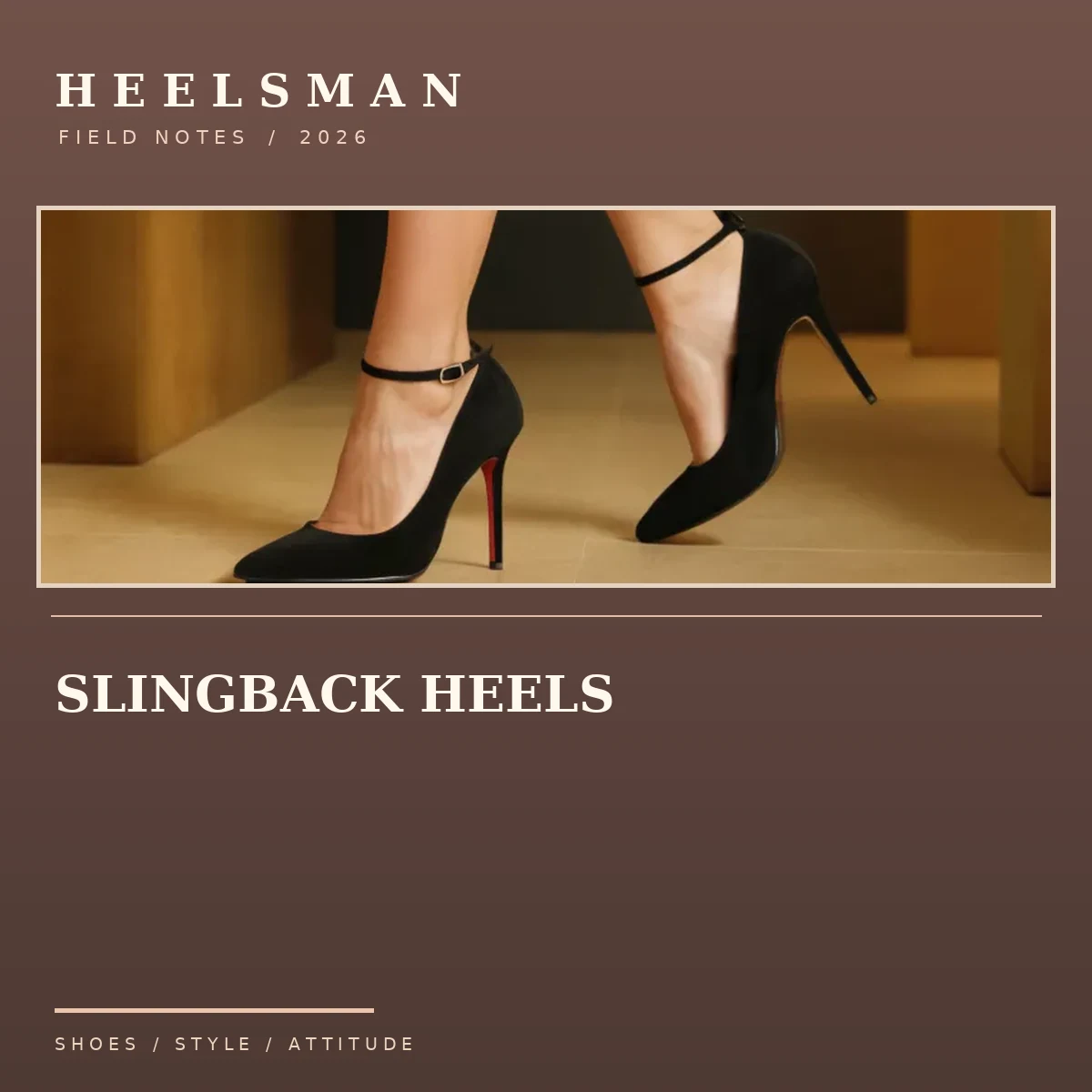
A slingback looks exceptionally composed from the front. Then you look behind it and discover the entire shoe is being held together by a single strap and the wearer's optimism. It is fashion's version of a perfectly pressed shirt with a deeply questionable backstory.
That exposed heel is the whole point. A slingback keeps the front of a pump or sandal and replaces the enclosed back with a strap around the heel. When it fits, the result is light, elegant and pleasingly architectural. When it doesn't, you spend the evening negotiating with an elastic band. Let us avoid the second version.
Slingbacks, pumps and ankle straps are not the same

A conventional pump encloses the back of the foot. A slingback runs a strap behind the heel, leaving most of it exposed. An ankle-strap heel may circle the ankle instead, often in addition to other straps. A heeled mule has no heel strap at all. Small details, rather different walking experiences.
The toe can be pointed, square, round or open. Heel shapes range from kitten heels to medium blocks and stilettos. The defining feature is not how tall you stand but what happens at the back of the shoe.
The V&A's account of Chanel's two-tone shoe identifies the low-heeled, elasticated slingback developed with Massaro in the early 1960s as a key Chanel design. It paired a pale upper with a dark toe cap and fitted beautifully into an everyday wardrobe. A small lesson in longevity: good design can be memorable without looking as if it has swallowed the jewellery counter.
Why does a slingback strap keep falling down?
Usually one of three things is wrong: the strap length, the way the shoe fits your heel, or the relationship between the front of the shoe and the back. If the forefoot slides forward, the strap may lose its position even though it seemed snug while you stood still.
Check it when walking, not while posing. Does the band pop off after a few steps? Does it pinch when you bend your foot? An adjustable buckle or elastic insert can help, but neither will rescue a fundamentally unsuitable fit. The fitting advice from Charles & Keith makes the same distinction: a band that slips freely or bites painfully is a warning sign.
Do not automatically size down. That may push your toes into the front edge, especially in pointed shoes. Start by measuring both feet, checking the toe box and trying the pair on a firm surface. See Heel Width Explained if you are forever choosing between crushed toes and a loose heel.
The discreet advantages of a secure slingback

Slingbacks reveal more of the foot without demanding an aggressive heel height. A modest kitten heel can be interesting beneath tailoring; a black pointed slingback looks crisp with trousers; a glossy two-tone design has the sort of classic charm that makes minimalists smug.
They can also be easier to slip on than a full boot. That does not make them a good choice for every situation. Wet pavements, crowded dance floors and long walks still require sensible traction, a stable heel and predictable footing. A slingback on a slippery stair is not the place to audition a personal theory about grace.
One advantage for adventurous male dressers is how well these shoes sit between conservative and theatrical. With a business outfit, a two-tone low heel looks intentional. With a relaxed trouser suit, the bare heel adds a bit of softness without turning the entire outfit into a performance.
Four outfits that do not need an apology
Try a black slingback with tailored charcoal trousers and a white shirt; let the shoe do the talking. Wear cream-and-black slingbacks with dark denim and a neat blazer for a reference to classic couture rather than a costume. Take a cherry-red pair to dinner with a simple black dress or wide-leg suit. Or combine a low block slingback with pleated shorts, visible socks only if the proportions genuinely work, and a healthy disregard for family committees.
A word about socks and tights: they can change friction and fit. Fine hosiery may make a strap slide more readily. Test the exact combination you intend to wear. A shoe that behaved perfectly barefoot is under no obligation to do the same over silk.
Before you buy

Inspect the attachment points where the back strap meets the shoe. Check that elastic is secure, buckle holes are cleanly finished and the heel sits centrally under the back of your foot. Walk a short distance, turn, and go up one small step. If you need to clench your toes or keep pausing to retrieve the strap, decline the invitation.
I adore the visual honesty of slingbacks. They reveal their construction. The strap is right there, doing a great deal of work for very little credit. Much like the person who organizes a party while the best-dressed guest takes all the photographs.