Oxford Heels: A Well-Educated Shoe with Very Bad Intentions
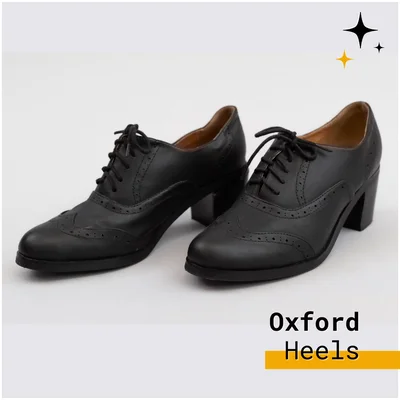
An Oxford shoe looks like it might correct your Latin. An Oxford shoe with a high heel looks like it might do so while stealing your boyfriend. I consider both perfectly respectable talents.
There is something delicious about Oxford heels. Laces, tidy seams, sober leather. All the mannerisms of a traditional dress shoe, with a little extra height inserted into the conversation. They appeal to the part of me that owns a decent blazer and the other part that refuses to behave inside it.
But what actually makes a shoe an Oxford? Let's begin with the construction, because the vocabulary has been badly abused by shopping sites.
Oxford versus Derby: the lacing is the evidence
A traditional Oxford has closed lacing. Its lace-facing sections attach underneath the vamp, the main piece over the front of the foot. When laced, those sections come together in a clean, restrained line. A Derby has open lacing, with the facing sections attached on top, leaving more room to open them apart.
Neither construction requires a flat shoe. Add a raised heel to the Oxford pattern and you have an Oxford heel. The upper still determines the family name. The heel only changes its attitude.
This is the same distinction described by the Northampton shoemaker Crockett & Jones in its guide to the English Oxford. Some retailers casually call almost any laced ankle shoe an Oxford. I would prefer they did not. But the internet has survived worse crimes against terminology.
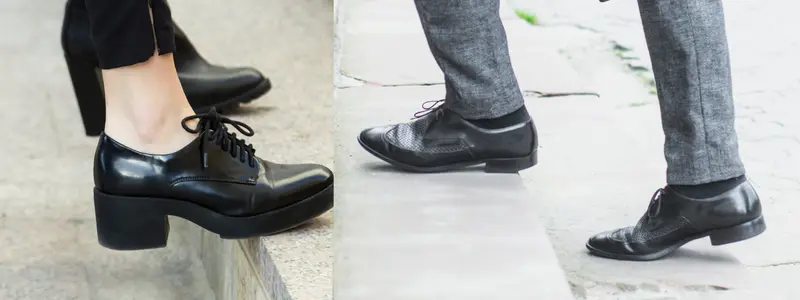
If you want a boot without laces and with a similarly mischievous masculine history, see Cuban heels. It is a different construction and a rather different kind of trouble.
Where did Oxford heels come from?
There are several competing stories about the exact origin of the Oxford name. One popular account points to nineteenth-century Oxford University and a move away from higher boots towards lower shoes. It makes a pleasant story, especially if you imagine bored students staging a rebellion through footwear. The precise chronology, however, is less settled than the souvenir version suggests.
What we can document is the evolution of the style. The British Footwear Association identifies the closed-front Oxford among established men's shoe styles by the 1870s. And the shoe did not remain exclusively male.
The Metropolitan Museum of Art preserves British women's heeled Oxfords from about 1927. The collection record even describes multiple colour and material variations made for one client. Think about that for a moment: almost a century ago, someone was commissioning heeled Oxford variations with a seriousness I usually reserve for choosing cake.
SATRA's footwear history of the 1920s describes sturdy Oxford walking shoes with substantial heels, along with more slender Louis heels and contrasting two-tone combinations. In other words, Oxford heels are not a recent Frankenstein experiment by an over-caffeinated designer.
If you'd like to pursue the larger case of men, women and their suspiciously shared wardrobe, my history of high heels contains the evidence, and a modest amount of indignation.
How to recognise the different Oxford heel styles
A classic low-heeled Oxford usually gives you a formal leather upper, closed lacing and a modest lift. It is a natural fit for suits, tailored trousers and vintage outfits. An Oxford pump might have a higher, slimmer heel and a more fitted silhouette. The shape can become almost delicate without losing the closed-lace detail.
Two-tone Oxfords use contrasting panels. Black and white look particularly splendid with tailoring, though tan with cream or oxblood with darker accents can be less theatrical. I say less theatrical, not dull. Life has already supplied enough beige conference rooms.
Brogue Oxfords feature decorative perforations. Broguing describes the ornament, not the lacing system. A brogued Derby is still a Derby. This is an excellent opportunity to sound insufferably knowledgeable at a shoe shop, should the mood take you.
Platform Oxford heels add height beneath the forefoot as well as the heel. That changes the look and can change the effective angle of the foot, but a tall platform also affects flexibility and your sense of the floor. It is not an automatic comfort upgrade. Compare the mechanics in platforms versus stilettos.
Styling Oxford heels without dressing like a museum exhibit
For an everyday outfit, try dark trousers ending above the shoe and a simple shirt. The exposed laces and shape deserve space. A fitted jacket gives the outfit authority, although authority is optional. I occasionally prefer to look like a man who has resigned from something expensive.
For a more academic look, tweed or wool trousers, a cardigan and a two-tone Oxford can be charming. Be careful with the number of vintage signals. Tweed, braces, a pocket watch and a hat in one outfit may suggest you're about to explain railway timetables to an unwilling stranger.
For contrast, pair black heeled Oxfords with jeans and a clean jacket. Or try a more sculptural Oxford with a plain dress, skirt or tailored shorts. It doesn't matter which gender the shop intended. What matters is whether the proportions behave.
A shiny patent Oxford can look excellent at an evening event. You'll need a little more restraint elsewhere, and perhaps my patent leather guide if you want the finish to remain immaculate. Gloss is a demanding relationship.
For outfits that combine masculine tailoring with overtly feminine footwear, see outfits with heels for men. The joy is in the contrast, not in following a gender chart.
Comfort: the laces help, but the toe box still has opinions
A lace-up fastening can help hold the instep more securely than an open pump, provided the shoe fits. But closed lacing has limited room for adjustment. If your instep is high, the facings may strain or refuse to sit comfortably. You might find an open-laced Derby easier to accommodate. The actual last and leather matter more than an elegant product title.
Before buying, check the following:
- Measure foot length and width, not just the number printed on the sole.
- Try both shoes standing up, with the socks or tights you intend to wear.
- Check that the ball of the foot falls near the shoe's widest area.
- Make sure toes can move without pressing against the toe cap.
- Confirm that laces hold the shoe firmly without causing pressure across the instep.
- Walk on a safe surface. Heel slippage, pinching and wobbling don't improve because the mirror is flattering.
The AAOS shoe-fitting guide explains why toe shape, heel height and fit matter. It also warns about the pressure that higher heels place on the front of the foot. An elegant Oxford cannot repeal biomechanics, regrettably.
If width is your recurring enemy, try heels width explained. For practical footwear rather than theoretical elegance, comfortable high heels for men is worth your attention.
Are Oxford heels masculine or feminine?
Yes.
That is not a typographical accident. A flat black Oxford is routinely sold as traditional men's formalwear. Add a high heel and someone may transfer it to the women's department overnight. The laces haven't changed. The marketing department has simply become emotional.
A heeled Oxford can make an outfit appear scholarly, punkish, charming, imposing or deliberately androgynous. A low heel may emphasise old-fashioned tailoring; a sharply sculpted heel can challenge it. For a broader discussion, read men in heels and unisex heels.
I find the combination rather satisfying. It lets me arrive looking reasonably educated while quietly informing the room that my education has been put to improper use.
Buying vintage or modern Oxford heels
For vintage pairs, check the lining, leather flexibility, heel attachment and state of the soles. Old adhesive can fail even when the outside looks pristine. Ask about repairs, smell for signs of damp storage, and be sceptical of listings that show only the attractive side of one shoe. A century-old shoe may be a beautiful object without being safe for regular walking.
For a modern pair, look for clear photographs of the closed lacing, heel attachment, outsole and the actual shoe on a foot. Confirm the return policy. A heeled Oxford may fit differently from your usual flat Oxford even when both come from the same manufacturer. Fancy nomenclature is not a size chart.

The Heelsman's verdict
Oxford heels work because they introduce a small disagreement into a very proper silhouette. They are useful, striking and full of historical references, but they don't require a university degree to wear. Good fit will do.
And should anyone ask whether they're respectable shoes, tell them the shoes are impeccably respectable. You're the questionable element.