Peep-Toe Heels: One Toe, Several Opinions
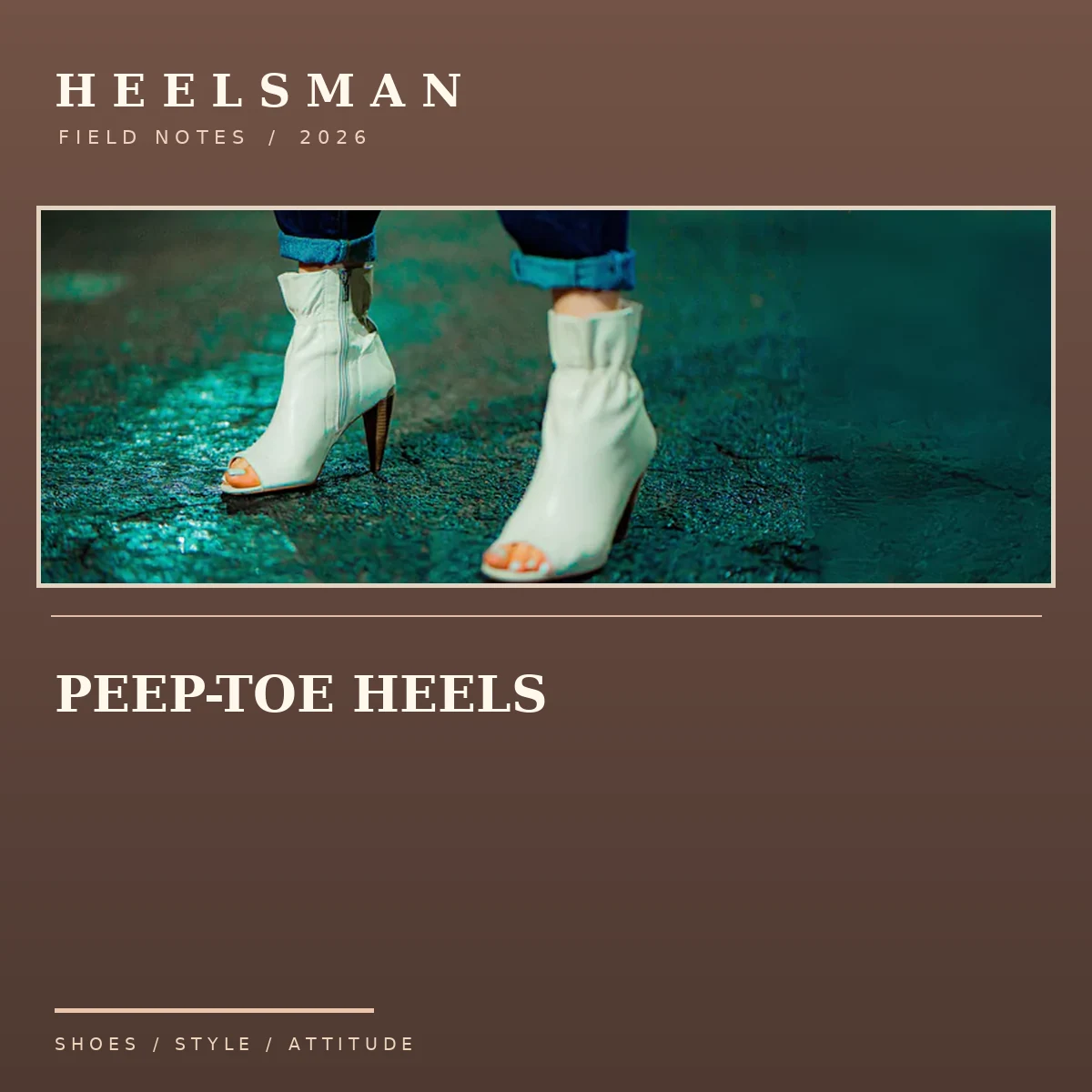
A peep-toe shoe exposes just enough toe to start a conversation, then pretends to be shocked when one occurs. I have always admired that level of hypocrisy. It is nearly aristocratic.
The temptation is to dismiss peep-toes as a nostalgic relic of pin-up photographs, vintage dressing rooms and shoes that demand an immaculate pedicure. That would miss their more useful quality. The tiny opening changes the appearance, fit and character of an otherwise closed shoe. Sometimes it adds charm. Sometimes it introduces a fresh mechanical problem for your toes.
What makes a shoe peep-toe?

A peep-toe has a small opening at the front, usually revealing one or two toes. This distinguishes it from an open-toe sandal, where more of the forefoot is uncovered and straps often form the front structure. There are peep-toe pumps, ankle boots, platforms and even some retro-inspired wedges.
The opening may be small, but it does not absolve the shoe of having a proper toe box. A cutout that squeezes the toes together is merely a narrow pump with an extra opportunity to complain.
The Manolo Blahnik Archives trace the peep-toe's provocative reputation and discuss the designer's cinematic inspiration. A pair of 1940s peep-toe shoes in Aberdeen's museum collection offers a more concrete look at the period. Fashion history is more convincing when a shoe survives long enough to contradict the marketing copy.
The 1940s, glamour and a small hole in propriety
Peep-toe and slingback shoes were subject to restrictions in wartime Britain, when manufacturing rules and material conservation shaped design. The often-repeated claim that peep-toes were simply banned for indecency is a little too neat. The history of utility clothing is more complicated than a universal rule about an exposed toe.
The Chertsey Museum's wartime footwear collection discusses the Utility mark, coverage requirements and the later lifting of restrictions. It is a better source than a nostalgic meme featuring a woman looking scandalised by her own feet.
Peep-toes then became closely associated with polished, mid-century glamour. That heritage is fun to borrow. You do not need victory rolls, cherry lipstick and a small convertible to justify the purchase. Although I will not interfere with your plans if you have all three.
Fit: the toe opening is the test

Try them on standing. The opening should not cut into the skin or force the longest toe to protrude uncomfortably. Check both feet; they may not be identical. If toes bunch up behind the opening, the shoe is too short or the shape is wrong. If the forefoot slides forward excessively, the opening can become a pressure point.
The AAOS shoe-fitting guidance advises against narrow toe boxes that crowd the toes. It is guidance worth remembering even when the advertisement uses words such as sensational and sculptural. Neither word appears in a podiatrist's description of a blister.
An open front does not guarantee a wider fit. Sometimes the visible toe makes the problem more obvious. For a more detailed comparison, read Best High Heels for Wide Feet.
Peep-toe styling without becoming a museum exhibit
With cigarette trousers and a crisp shirt, a low-heeled peep-toe gives a controlled vintage reference. A dark peep-toe ankle boot under cropped black jeans looks sharper, especially if the opening is small and the rest of the shoe is structured. With a dress or wide-legged jumpsuit, a satin or suede pump can look wonderfully composed.
For men interested in the style, the proportions matter more than the alleged gender of the shoe. Try a dark peep-toe boot beneath tailored trousers, or a restrained block-heel version with a fluid suit. If that feels like too much exposure for a first outing, a Mary Jane heel offers more coverage and a related vintage mood.
Avoid building the entire outfit around the idea that everybody must look at your feet. Sometimes the most effective approach is to dress normally and allow a little ridiculousness to happen near the floor.
Are peep-toe heels appropriate for work?

That depends on the workplace, dress code and practical conditions. An office with a conservative closed-shoe policy is not magically converted by a very small opening. In a creative setting, a neat low or medium heel may work beautifully. Use common sense about floor surfaces, foot protection and the task at hand; our Work Heels guide goes into those decisions.
I like peep-toes because they understand the difference between showing everything and suggesting something. An exposed toe is not a revolution. It is a punctuation mark. And with the right shoe, an excellent one.