Non-binary Fashion with Heels: The Labels Are Having a Breakdown
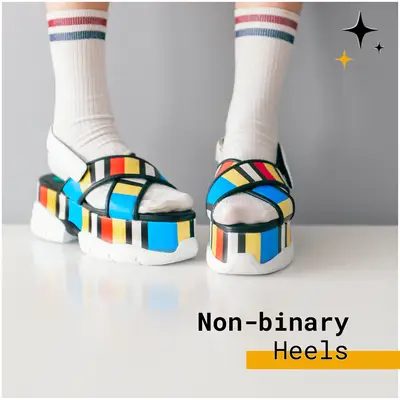
A wardrobe is not a ballot paper. You do not have to vote Masculine or Feminine before breakfast. Personally, I would like a third option marked "I have excellent shoes and an appointment at three".
Nonbinary fashion interests me because it questions a rather lazy idea: that clothes arrive with a fixed gender and a small instruction manual. Wear the wrong combination, we're told, and the entire structure of civilisation may collapse. Yet the world has survived men in powdered wigs, women in tailored suits and approximately six thousand regrettable experiments with skinny jeans.
The fun part is mixing shapes. The difficult part is finding shoes that genuinely fit. Let's deal with both, without declaring a fashion revolution every time somebody buys a boot.
Nonbinary is an identity, not a uniform
First, a distinction. Being nonbinary is about gender identity, not a specific style. A nonbinary person may dress in ways other people read as masculine, feminine, androgynous, extravagant or ordinary. Clothing doesn't certify identity, and no one needs my permission to choose it. The GLAAD terminology guide explains the difference between gender identity and expression.
That is why I distrust phrases like "the perfect nonbinary look". Perfect for whom? The person in black trousers and heeled boots? The person in a floral dress and loafers? The person whose gender expression changes daily but whose hatred of uncomfortable shoes remains constant?
If you want to explore how footwear escapes gender categories, read my piece on unisex heels. Here I want to construct actual outfits rather than argue with department-store signs until security escorts us out.
The masculine base, feminine interruption
My first combination is simple: clean tailoring with an unexpected heel. Straight trousers, a good jacket and a narrow, moderate heel. The outfit looks conventional from the shoulders down, until the shoes deliver a small correction.
This works beautifully because the contrast is deliberate. A structured blazer and a pointed pump have different visual languages. Together, they produce tension. The good kind. A modest black block heel gives a quieter effect; a patent stiletto makes the argument in capital letters.
Keep the trousers long enough to meet the shoe without swallowing it. Too much fabric hides the line. Too little can look accidental unless you intend a cropped silhouette. The objective is interesting proportion, not a hostage negotiation between your ankle and hem.
For a lower-profile alternative, Oxford heels combine classic dress-shoe detailing with visible height. The shoe looks educated. Whether you behave accordingly is another matter.

A softer silhouette without surrendering structure
A long skirt, soft knitwear and chunky heeled boots can feel balanced rather than theatrical. A fitted top gives definition; an oversized jacket changes the proportions. Try one exaggerated element at a time. An enormous sleeve, an enormous platform and an enormous hat can coexist, but somebody should notify the local planning authority.
I also like wide-leg trousers with platforms. The extra sole can help the hem sit above the floor, provided the trousers are measured while wearing those shoes. Don't buy platform heels purely to rescue trousers that need altering. A tailor is cheaper than a twisted ankle.
At the opposite extreme, a pleated skirt with simple Mary Janes can look charming, neat and slightly school-uniform-adjacent. The strap breaks up the top of the foot and can improve retention when the shoe fits correctly. My Mary Jane article goes into the practicalities, because adorable footwear should not behave like an unsecured suitcase.
The shoe must fit the foot, not the gender category
This is the section where the romance meets a measuring tape. Shoes sold in different departments can use different lasts, width assumptions, size systems and toe shapes. None of that reveals anything about the person wearing them.
Measure both feet while standing. Compare length and width against the brand's actual size chart. Check toe-box depth, not merely the number printed on the box. An angled or pointed toe can make a shoe feel narrow even if the labelled size appears right.
I strongly object to the idea that discomfort is the admission fee for gender creativity. If a shoe digs into the big-toe joint, slips at the heel or pushes toes together, it's the wrong fit. The American Academy of Orthopaedic Surgeons explains why toe room and heel height matter.
There are practical routes around the problem: adjustable straps, roomier toe boxes, stable block heels and brands with genuinely extended sizing. I discuss the measurements in my wide-feet guide and my large-size guide.

A heel isn't automatically feminine, and a boot isn't automatically masculine
People read style through expectations. A sharp heel can be perceived as feminine, powerful, theatrical, sexy, professional or entirely impractical, depending on who wears it and where. That's not a contradiction. It is fashion doing what fashion has always done: changing the meaning of ordinary objects.
The Museum at FIT's queer fashion exhibition explored the long history of androgyny, dandies and the deliberate disruption of familiar dress codes. History is rather inconvenient for anyone who insists these boundaries were permanent.
A Chelsea boot with a two-inch heel might make one person feel sharply masculine. Another person may find the same heel softly feminine. A third will want to know whether the outsole grips wet pavement. I respect that third person. They've clearly met British weather.
An outfit for ordinary life, not just the photographs
My practical test is always the same: can I wear it through a realistic day?
Can I sit, walk, take stairs, cross a street and spend time standing? Do I have to keep adjusting a strap? Does the fabric catch against the shoe? What happens when I put on my coat? Some outfits photograph beautifully and behave appallingly in a supermarket queue.
Try a combination at home before committing to an event. A short walk reveals more than twenty mirrors. If heels are new to you, begin with moderate height and practise at your own pace. My walking guide includes ankle safety and why there is no obligation to manufacture a sexy runway walk.
What I refuse to do for fashion
I refuse to tell anybody how nonbinary identity should look. I also refuse to pretend every shoe is comfortable or every combination is flattering. You can reject gender rules and still insist on proportion, craftsmanship and an outsole that doesn't attempt murder on wet tiles.
You don't have to announce your gender with your clothes. You can, if that's your pleasure. Your outfit may change while your identity stays the same. It may also stay the same while you work out how you want to describe yourself.
The label on the box has one task: tell me what's inside. For everything else, I prefer to open the box.