Driving in High Heels: Change the Shoes, Keep the Drama
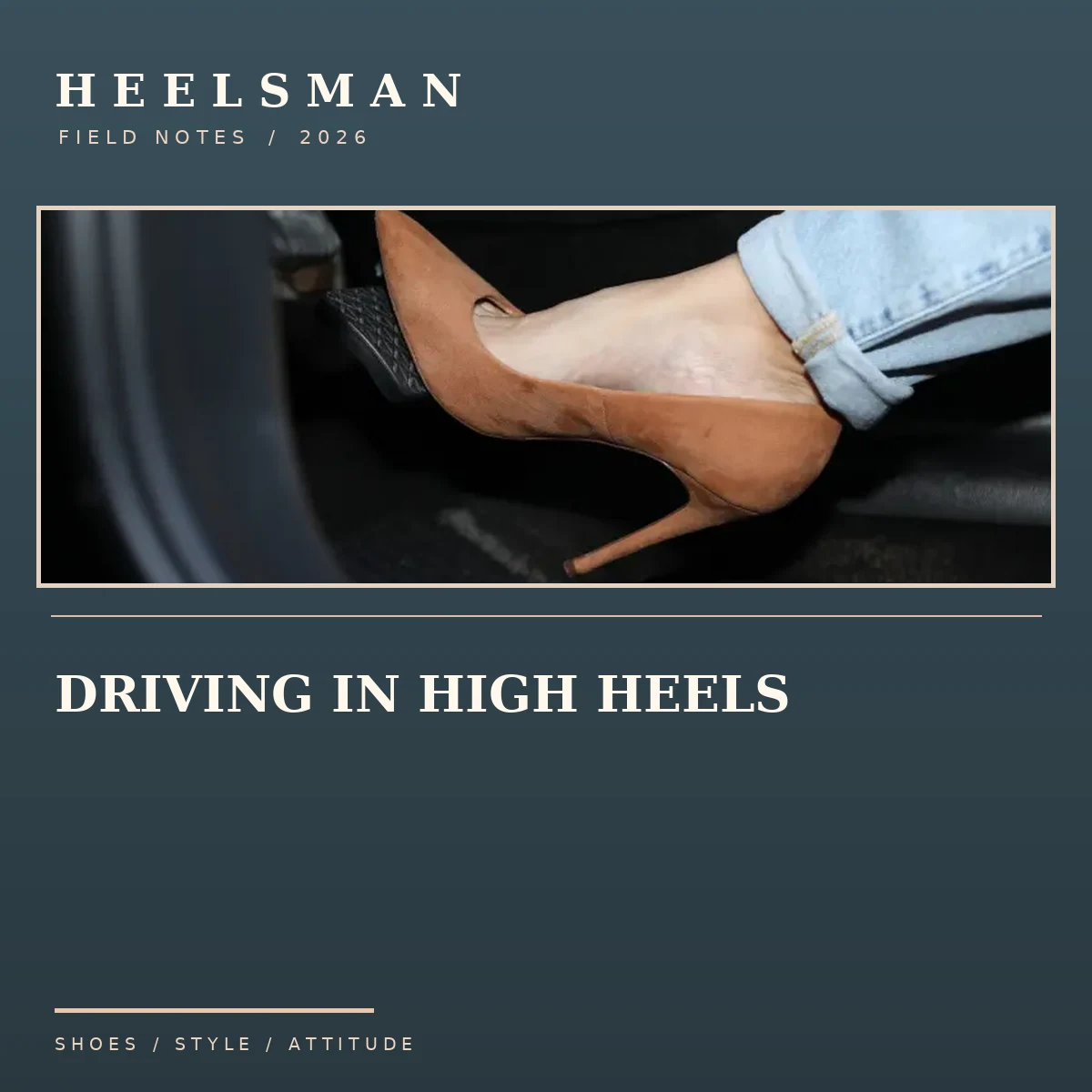
There is a time to make an entrance in spectacular heels. The driver's footwell is not that time. It contains pedals, very little space and an impressive collection of things that can go wrong if the accelerator and brake are treated as accessories.
I enjoy a beautiful shoe as much as any unreasonable gentleman. I simply prefer my car to remain an instrument of transport rather than a test of whether a stiletto can become wedged under machinery. Fashion has plenty of dangerous metaphors. We do not need to turn one into traffic.
Are you allowed to drive in high heels?
The answer depends on your location and its traffic laws. In the United Kingdom, there is no blanket rule naming high heels as automatically illegal. The relevant requirement is that your clothing and footwear must allow proper control of the vehicle. The AA's guide to driving footwear explains why high heels and bulky or loose footwear can make pedal operation more difficult.
Rules differ elsewhere, and local legal questions deserve local sources. A claim that high heels are absolutely illegal everywhere is nonsense. A claim that they are therefore safe to drive in is equally poor reasoning.
For practical advice, the RAC's driving footwear guide stresses grip, flexibility and control. The safest habit is to choose stable driving shoes rather than ask a glamorous heel to perform a job it was not designed for.
What exactly can go wrong?

A tall heel may interfere with the way your foot pivots between pedals. A thick platform can reduce feedback, making it harder to judge pedal pressure. Loose shoes can slide off; a narrow heel may catch against part of the footwell. Even a familiar pair of shoes can feel different when you are seated with the foot angled forward.
That does not mean every high heel will cause an accident. It means there are avoidable design features that can interfere with control at the worst possible time. The car will not award style points for a complicated emergency stop.
Open-toe mules, loose sandals and tall platforms present different problems, but they all justify caution. Our articles on heeled mules and platforms versus stilettos explain how the construction differs underfoot.
The sensible routine: two pairs, one functioning brain
Keep a pair of well-fitting, flat, secure driving shoes in the car. Change before operating the vehicle, while parked safely. Put your high heels away where they cannot roll into the driver's footwell or under the pedals. The back seat or an enclosed bag is considerably better than the floor by your feet.
Choose driving footwear with reliable grip, a sole that allows you to feel and operate the controls and a secure fit that won't slip off. Avoid the fantasy of driving barefoot as a universal solution; control requirements, conditions and regulations vary. There is no need to turn a safety decision into another fashion identity debate.
Before setting off, adjust the seat as usual and make sure your chosen shoes allow smooth braking and acceleration without the foot catching or slipping. If you cannot operate the pedals confidently, do not drive until the problem is resolved. A different pair of shoes costs considerably less than a collision.
What about a short drive across town?

Distance is irrelevant to whether you might need to brake suddenly. A two-minute drive can contain a junction, a pedestrian or somebody who believes indicators are a matter of personal expression. Do not make exemptions for short trips simply because changing shoes is inconvenient.
The same applies after a party. If you are exhausted, impaired or otherwise unfit to drive, changing shoes does not make driving safe. Footwear is one part of the picture, not a substitute for basic judgement.
Arriving beautifully without driving foolishly
This arrangement has an underrated benefit: you can choose your evening heels for the destination rather than for the steering wheel. Wear outrageous stilettos to dinner, take a dramatic red-carpet heel to a formal event, or put on business heels after parking. The car does not get a vote.
For an outdoor wedding, bring sensible shoes for the grass as well. A shoe that handles an expensive restaurant floor may not appreciate a garden path. We discuss that particular betrayal in Outdoor Events in Heels.
Do I need special driving shoes?

Not necessarily. They need to fit and allow safe pedal control. A simple secure flat shoe is often entirely adequate. If you have a medical limitation affecting pedal operation, seek appropriate professional advice and consider the vehicle controls and local requirements, rather than solving the problem with footwear improvisation.
The real luxury is not arriving in six-inch heels. It is arriving in six-inch heels because you had the good sense to wear something else while driving. Taste and judgement can coexist. I know, a shocking development.