Activism in Heels: The Protest Has Better Shoes Than the Politicians

A pair of high heels at a protest can be magnificent. It can also be a terrible idea if the march takes you over six kilometres of wet cobblestones. Politics, as usual, refuses to consult the footwear department.
Shoes are unusually effective symbols. They are familiar, instantly recognisable and intensely personal. An empty pair suggests an absent wearer. A towering stiletto can make an audience think about gender before a speaker has reached the microphone. But symbolism has its limits, and an expensive shoe does not automatically turn its owner into an activist. My wardrobe would be eligible to run for parliament otherwise.
When footwear actually becomes a protest
The clearest example is Walk a Mile in Her Shoes, a campaign founded in 2001 to raise awareness about sexual assault and gender violence. Its events invite participants, including men, to walk in women's high-heeled shoes. The organiser explicitly describes the aim as confronting gender stereotypes and opening conversations about sexualised violence. That is a defined cause with an organised educational purpose, rather than a random photo of men tottering for a laugh.
There is room to question the format. Some participants may discover that their footwear assumptions were simplistic; others may treat the whole occasion as a comic costume stunt. Neither a short march nor aching feet can reproduce another person's experiences of violence. The measure of success is what people learn, support and do afterwards. The shoes are the invitation to listen, not the conclusion of the argument.

I love a theatrical entrance. I am considerably less impressed when the theatrical entrance is followed by no actual work.
Red heels: power, absence and memory
A useful complication comes from the Centraal Museum Utrecht's examination of red shoes as symbols. The museum connects red footwear to shifting meanings of power, desire and resistance, and discusses public installations of red shoes protesting femicide. In those settings, the shoes often stand for people who cannot stand there themselves. It is a grave use of an object we normally associate with pleasure and display.
This is not the same red as an advertising campaign or a theatrical costume. Context changes everything. Royal red heels once communicated privilege; a red-shoe installation can communicate loss and demands for accountability. My history of high heels explains the longer and often awkward history of who was allowed to wear height.
It would be offensively easy to turn every red pump into a vague statement about bravery. We can do better than treating serious grief as a mood board.
Men in heels are visible, but visibility is not a duty
A man in heels challenges certain expectations merely by leaving the house. Sometimes the reaction is curiosity. Sometimes it is suspicion, laughter or enthusiastic admiration from somebody with excellent taste. In my case, I would prefer the last category to become compulsory, though I recognise the constitutional difficulties.
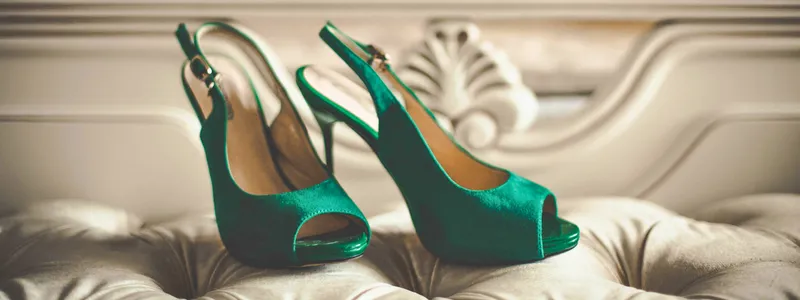
The public significance of men wearing heels does not mean every heelsman is campaigning. A person can wear Cuban boots because the shape looks superb. Another might choose a stiletto to make a deliberate statement. Both are legitimate. The object does not supply a biography, a sexuality or an identity label.
The same courtesy matters when we discuss LGBT fashion or non-binary styling. Clothes can express identity; strangers cannot reliably diagnose it by inspecting an ankle strap.
Protest costumes and the politics of practicality
If you are participating in an event, the cause matters more than the heel height. Check the route, surfaces, weather, accessibility and expected duration. Bring suitable footwear for the travel and walking portions. A sturdy block heel may be easier to manage than a narrow stiletto, but no heel is a guarantee of grip on wet stone or grass. Our outdoor events guide covers exactly that sort of betrayal by the ground.
Organisers should think about accessible participation. A movement does not become more inclusive by turning high heels into its entrance requirement. People who cannot or do not wish to wear heels can still donate, organise, learn, speak, volunteer and make institutional change.
Also pay attention to photographic consent and safety. Somebody attending a public event may not be ready for their face or gender presentation to circulate online. Campaign images are useful; other people's privacy is not disposable scenery.
Can a designer be an activist?
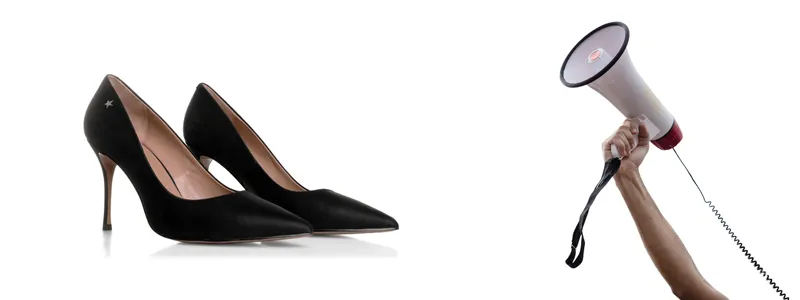
Certainly, but a campaign slogan on a shoe is not proof of meaningful action. Ask what the brand funds, whether its workers are treated well and whether the project contributes to the people it claims to support. The distinction is similar to the one I make in eco-friendly heels: beautiful language is not a substitute for evidence.
Fashion can amplify causes because it creates images people remember. It can also sell those images back to the audience with a markup that would make a royal tax collector blush. Keep the spectacle if it attracts attention. Demand substance if the spectacle claims moral authority.
A useful question before the next march
What is the action attached to the image? A fundraiser, a policy demand, a community organisation, a safer service, an educational programme? If the answer is only "a striking Instagram post," the movement may have acquired a stylist rather than an ally.
I shall continue wearing heels for pleasure, style and, when appropriate, public solidarity. The sole does not have to bear the entire weight of the argument. It does, however, have to survive the pavement.